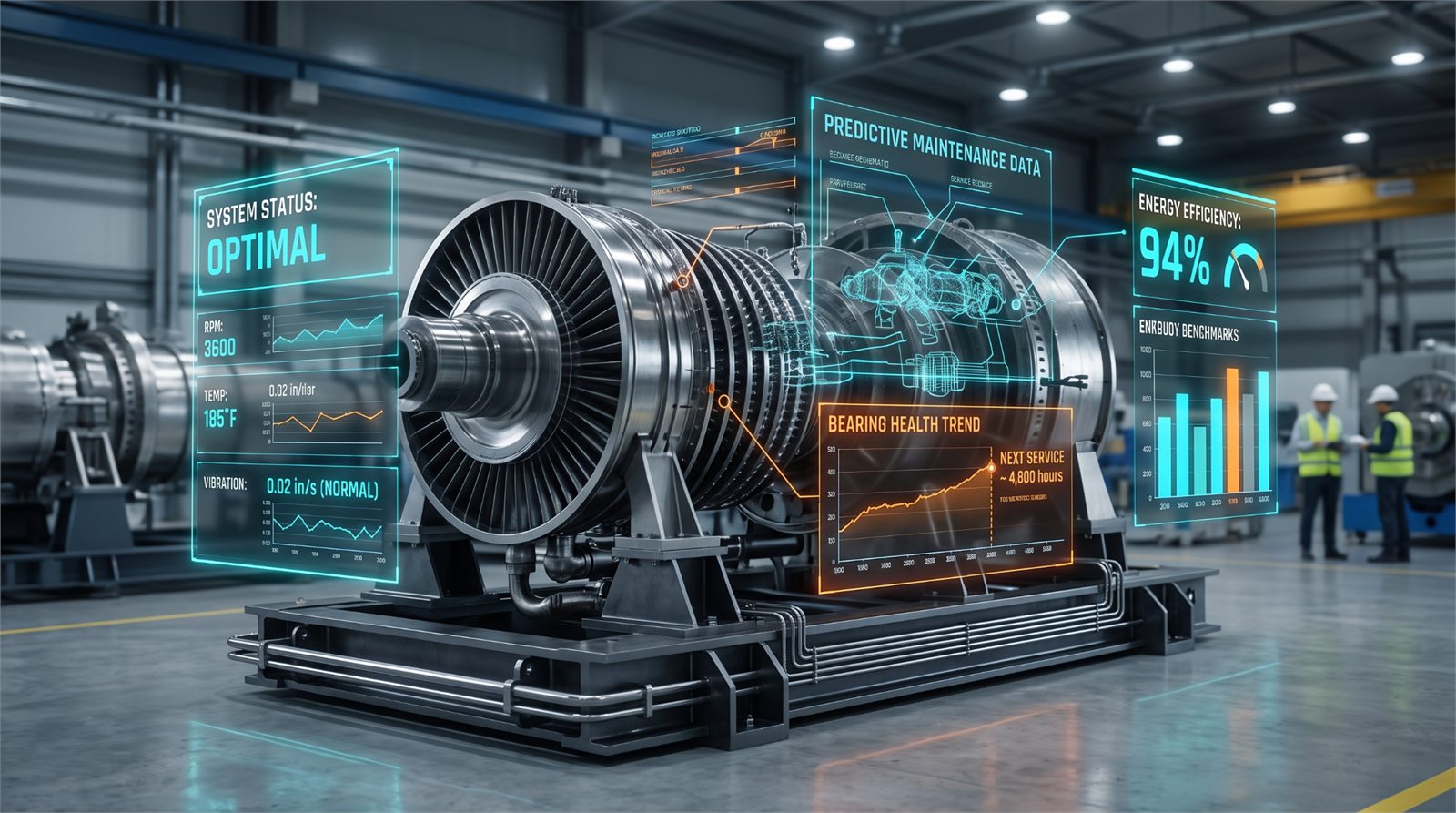
Unexpected equipment failure can bring production to a standstill, increase maintenance costs, and affect delivery schedules. Traditional maintenance approaches often depend on fixed schedules or repairs after a breakdown. Predictive maintenance software takes a different approach by using equipment data, condition monitoring, analytics, and machine learning to identify early signs of failure.
But how does predictive maintenance software actually predict when equipment is likely to fail?
The answer lies in continuously collecting equipment data, identifying abnormal patterns, comparing current performance with historical behavior, and generating actionable maintenance alerts.
What Is Predictive Maintenance Software?
Predictive maintenance software is a technology solution that monitors equipment condition and uses operational data to identify potential failures before they occur.
It can collect data from sensors, machines, maintenance records, work orders, and other operational systems. This data is then analyzed to identify changes that may indicate equipment degradation or an upcoming failure.
Unlike preventive maintenance, which schedules maintenance at predetermined intervals, predictive maintenance focuses on the actual condition and performance of an asset.
The objective is simple: detect problems early enough for maintenance teams to take action before an unexpected breakdown occurs.
How Does Predictive Maintenance Software Predict Equipment Failures?
Predictive maintenance generally follows a data-driven process. Here are the key stages.
1. Collecting Equipment Data
The first step is collecting accurate equipment data.
Sensors and connected machines can provide information such as:
- Temperature
- Vibration
- Pressure
- Rotational speed
- Motor current
- Humidity
- Operating hours
- Error codes
- Equipment status
Maintenance software can also use historical maintenance records, inspection reports, work orders, and asset information to provide additional context.
This creates a continuous stream of information about equipment health and operating conditions.
2. Establishing a Normal Performance Baseline
Predictive maintenance software needs to understand what normal equipment behavior looks like.
For example, a motor may normally operate within a specific temperature and vibration range. If its vibration gradually increases beyond its historical operating pattern, the software can identify this as a potential anomaly.
Establishing an equipment baseline makes it possible to distinguish normal operational fluctuations from meaningful changes in asset behavior.
3. Detecting Anomalies and Performance Changes
Once the baseline is established, the predictive maintenance system continuously compares incoming data against expected equipment behavior.
It can identify patterns such as:
- Increasing vibration
- Unusual temperature changes
- Pressure fluctuations
- Increased energy consumption
- Repeated error codes
- Changes in operating cycles
- Gradual performance degradation
These changes may not immediately cause a breakdown, but they can act as early warning signals.
4. Applying Predictive Analytics and Machine Learning
This is where predictive maintenance technology becomes more powerful.
Machine learning models can analyze historical equipment data and identify relationships between operating conditions and previous failures. The models can then evaluate new equipment data to estimate the probability of future failure or degradation.
For example, if historical data shows that a particular combination of rising temperature and vibration frequently occurs before bearing failure, the system can recognize a similar pattern in another operating cycle.
The software can then assign a risk or health score to the equipment.
5. Predicting Failure Risk
The system processes current equipment conditions and compares them with historical failure patterns.
Depending on the system and available data, predictive models can estimate:
- Probability of equipment failure
- Equipment health
- Potential failure modes
- Expected degradation
- Remaining useful life
- Maintenance priority
Modern predictive maintenance architectures can combine real-time equipment data with asset history, maintenance records, component information, and other contextual data to improve failure prediction.
6. Generating Maintenance Alerts
Prediction alone is not enough. Maintenance teams need actionable information.
When the system detects a significant anomaly or increased failure risk, it can generate an alert or maintenance recommendation.
For example:
Asset: Production Motor
Condition: Increasing vibration
Risk: High
Potential issue: Bearing degradation
Recommended action: Inspect bearing during the next planned maintenance window
This allows maintenance teams to investigate the problem before it becomes an unexpected production failure.
What Are the Benefits of Predictive Maintenance Software?
When implemented with reliable data and appropriate models, predictive maintenance software can help manufacturers:
- Reduce unplanned equipment downtime
- Identify equipment problems earlier
- Improve asset health monitoring
- Optimize maintenance scheduling
- Improve maintenance planning
- Reduce unnecessary component replacement
- Improve equipment availability
- Support better spare parts planning
- Improve maintenance decision-making
The larger benefit is visibility. Instead of discovering equipment problems only after performance has deteriorated significantly, maintenance teams can monitor asset health continuously and respond based on evidence.
Why Data Quality Matters
Predictive maintenance is only as effective as the data behind it.
Poor sensor data, incomplete maintenance records, incorrect asset information, or insufficient historical failure data can reduce prediction quality. Predictive maintenance programs therefore need reliable data collection, consistent asset records, and proper integration between equipment, maintenance, and operational systems.
A successful predictive maintenance system is not simply about adding sensors or AI. It is about connecting equipment data with maintenance workflows so that predictions can lead to timely action.
Conclusion
Predictive maintenance software predicts equipment failures by combining real-time equipment data, historical maintenance information, condition monitoring, anomaly detection, predictive analytics, and machine learning.
The process begins with collecting equipment data, establishing normal operating conditions, identifying abnormal patterns, analyzing historical failure behavior, and generating risk-based maintenance alerts.
For manufacturing plants, this approach can transform maintenance from a reactive activity into a more proactive, data-driven process.
Bring Predictive Maintenance Into Your Plant With PlantOps360
PlantOps360 helps manufacturing teams bring equipment, maintenance, and asset information into one connected maintenance environment. With features designed around asset management, work orders, maintenance tracking, asset history, downtime monitoring, MTBF/MTTR analysis, alerts, and predictive maintenance, it can help teams move toward more proactive maintenance operations.
If your plant is still relying heavily on manual tracking, spreadsheets, or reactive maintenance, it may be time to bring greater visibility into your equipment and maintenance processes.
Explore PlantOps360 and see how a modern plant maintenance software can support smarter, more data-driven maintenance.
Book a demo today and take the next step toward predictive, proactive maintenance.