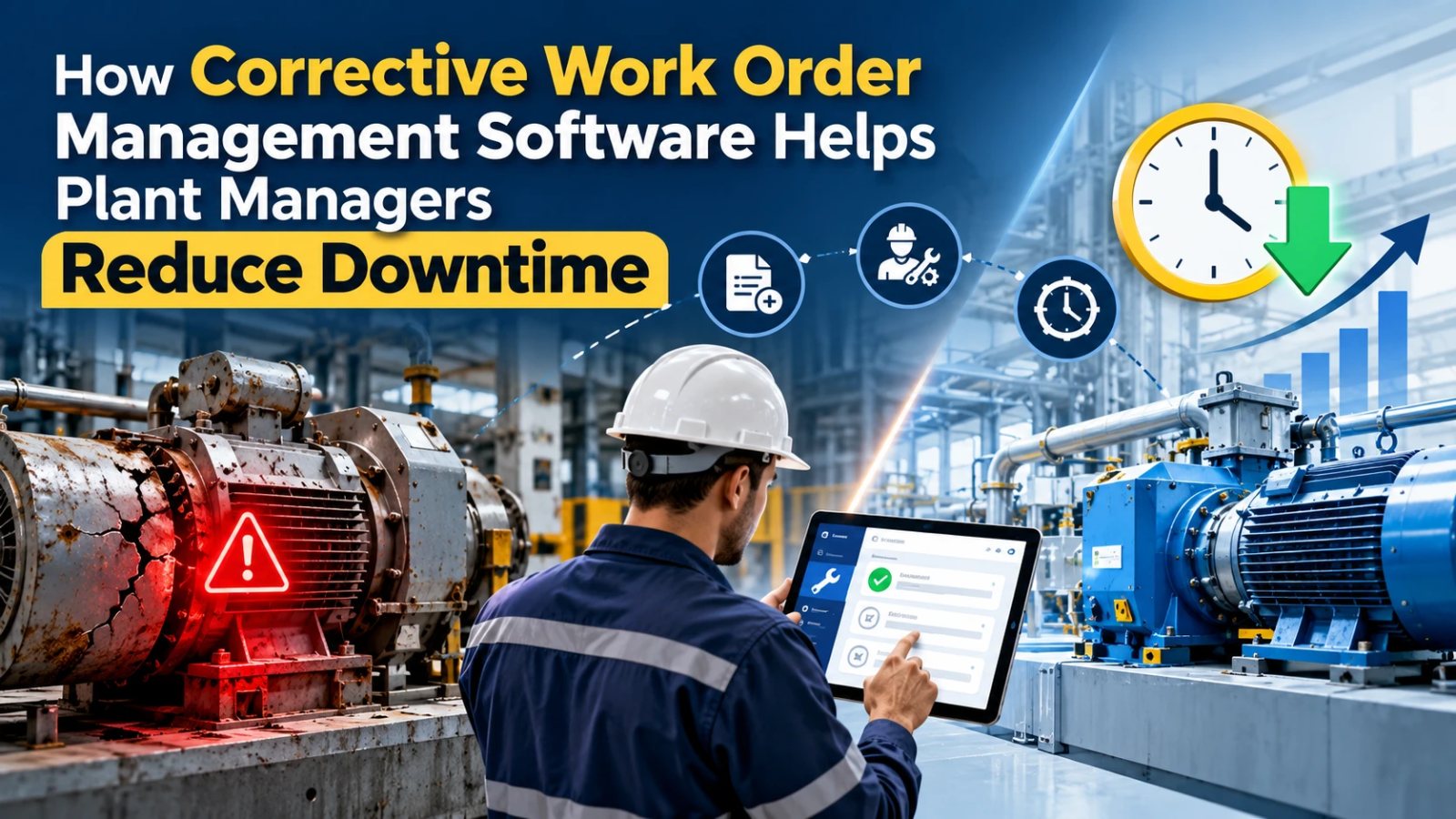
A machine stops in the middle of a shift. Production halts, and your team scrambles to find the cause.
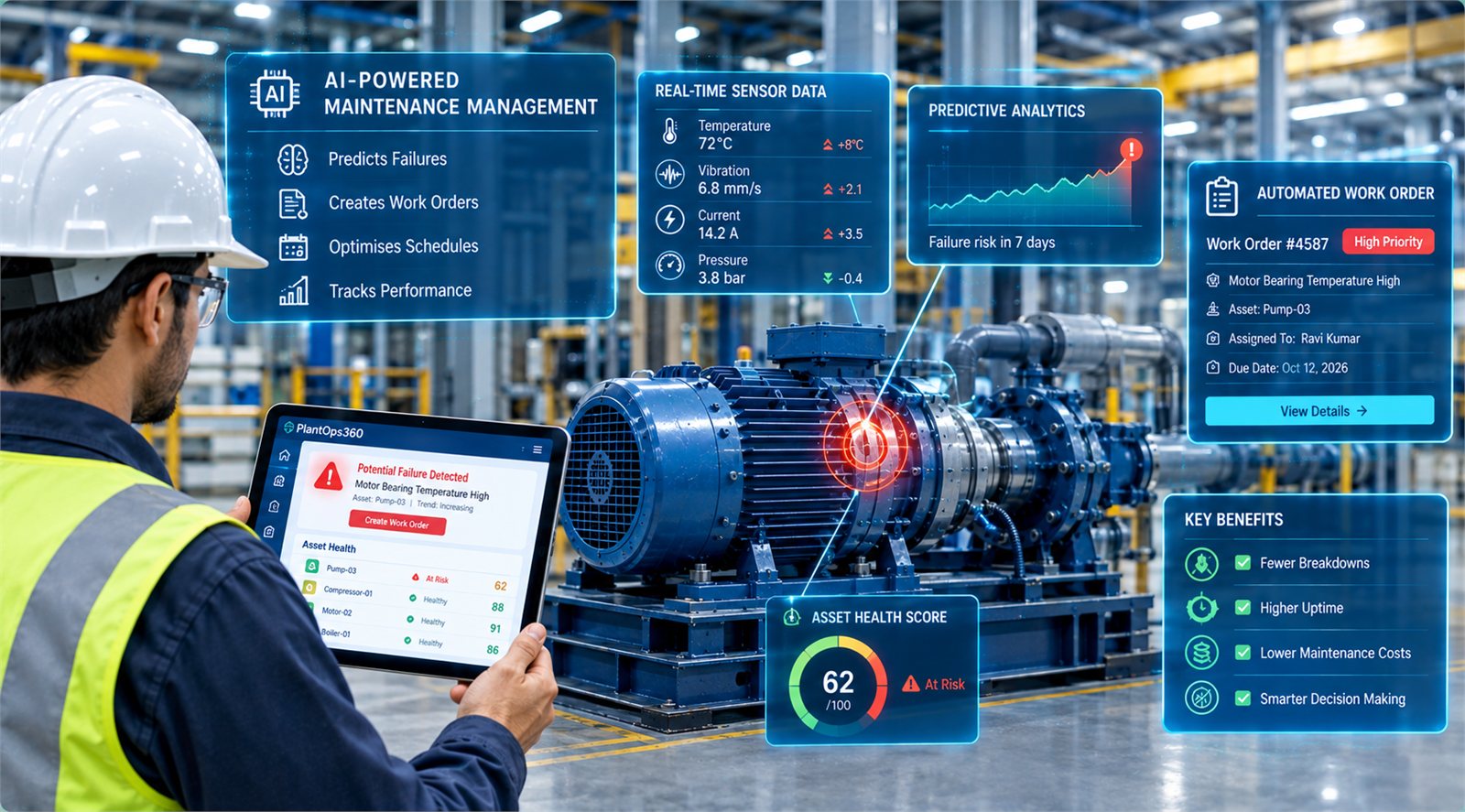
What if you could see that failure coming days earlier? That's exactly what maintenance management software with equipment failure prediction does. It watches your machines, spots early warning signs, and alerts your team before a breakdown happens.
In this guide, you'll learn which capabilities to look for, how preventive and predictive maintenance work together, and how your team can run smoother operations.
How Equipment Failure Prediction Works
Every machine gives small signals before it fails. A motor runs a little hotter. A pump vibrates a bit more. A bearing starts making a new noise.
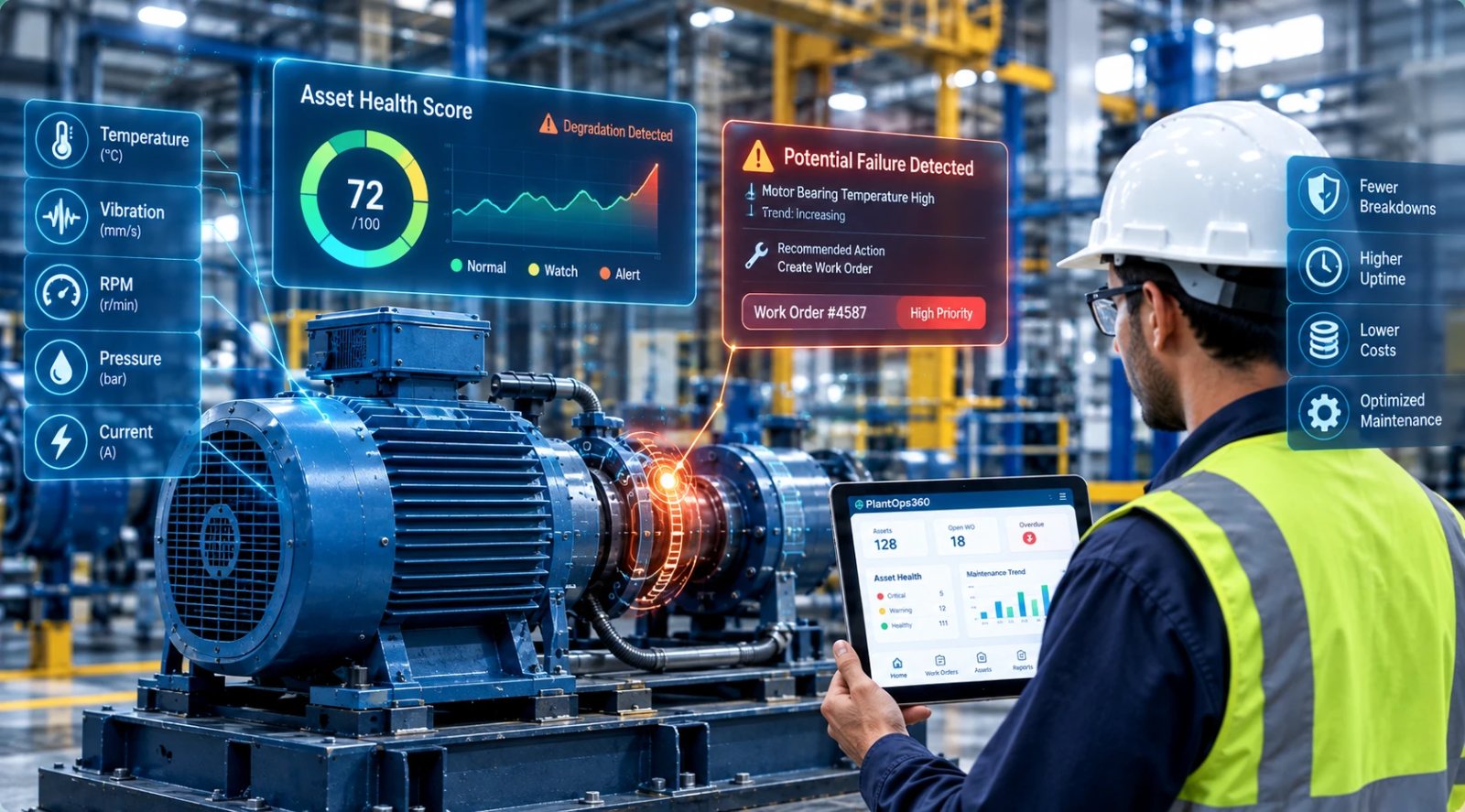
Good maintenance management software tracks these signals and compares them with normal behaviour. When something changes, it raises an alert.
The software learns from:
- Repair history: past breakdowns and how often they happen
- Meter readings: running hours, pressure and temperature
- Inspection notes: what technicians notice during routine checks
- Sensor data: live readings from IoT sensors, where installed
Preventive and Predictive Maintenance: Better Together
Preventive maintenance keeps your plant healthy on a planned routine. Servicing, lubrication and inspections happen on time, every time.
Predictive maintenance adds an extra layer of protection. It catches issues that develop between scheduled services.
- Preventive: regular care on a fixed plan
- Predictive: early warnings based on real machine condition
When both run in the same maintenance management software, nothing slips through the cracks. Research from the US Department of Energy shows predictive programmes can save 30–40% compared to purely reactive maintenance.
Key Capabilities to Look for in Maintenance Management Software
Not every tool offers real failure prediction. Check for these features before you decide.
Asset Health Scores
Each machine gets a simple score based on its condition. Your team instantly knows which asset needs attention first.
Smart Alerts with Automated Work Orders
An alert alone isn't enough. The software should turn each warning into a work order, with the right priority and technician assigned.
One Calendar for Planned and Predicted Work
Preventive schedules and predictive alerts should sit side by side. This gives planners a complete view of the week ahead.
Spare Parts Planning
When a part is likely to be needed soon, the store team gets notified early. That means fewer emergency purchases and shorter delays.
Mobile Access and Clear Dashboards
Technicians should update jobs from their phones. Managers should see key numbers like MTBF (average running time between failures) and MTTR (average time to fix a problem).
How Your Maintenance Team Can Streamline Operations
The right maintenance management software changes how each person on your team works.
Managers Plan with Confidence
With early warnings, managers can schedule repairs during planned stops. Fewer surprises mean less overtime and calmer shifts.
Technicians Spend More Time Fixing
Jobs arrive with instructions, past repair notes and parts ready. That means less time searching and more time doing quality work.
Plant Heads Get Steady Production
Fewer sudden stoppages keep output predictable. Maintenance costs also become easier to track and justify.
Choosing the Right Software for Your Plant
Before you buy, ask these simple questions:
- Can it start with our existing data, without sensors on every machine?
- Does it support preventive and predictive maintenance in one system?
- Is the mobile app simple enough for our technicians?
- Can it grow with us across multiple plants?
If the answer is yes to all four, you're looking at maintenance management software built for real teams.
Frequently Asked Questions
How much does maintenance management software cost?
Pricing usually depends on the number of users, assets and modules you need. Most vendors offer monthly or yearly plans. Ask for a demo and a quote based on your plant size.
How long does it take to set up?
Most plants can go live within a few weeks. The main work is adding your assets and maintenance history. Predictions get better as more data builds up.
How accurate are equipment failure predictions?
Accuracy improves over time. In the early months, alerts rely on history and readings. Adding sensors to critical machines makes predictions sharper.
Can we move our Excel maintenance records into the software?
Yes. Most tools let you import asset lists and past records from Excel. This gives the system a head start on spotting failure patterns.
Do technicians need special training?
Very little. A good mobile app is simple to use. Most technicians learn the basics in a day or two with a short demo.
Conclusion
Breakdowns will happen, but they don't have to catch you off guard. By combining preventive care with early failure prediction, your team can plan ahead and keep production running.
The right maintenance management software helps you spot problems early, assign work automatically and streamline daily operations.
Want to see it in action? Explore PlantOps360's predictive maintenance software and discover how your team can predict equipment failure and stay one step ahead.